

 Spotify

 Amazon Music

 iHeartRadio

 Youtube Music

 Apple Podcasts
A Tribute to Unsung Heroes: The Six Triple Eight Revealed
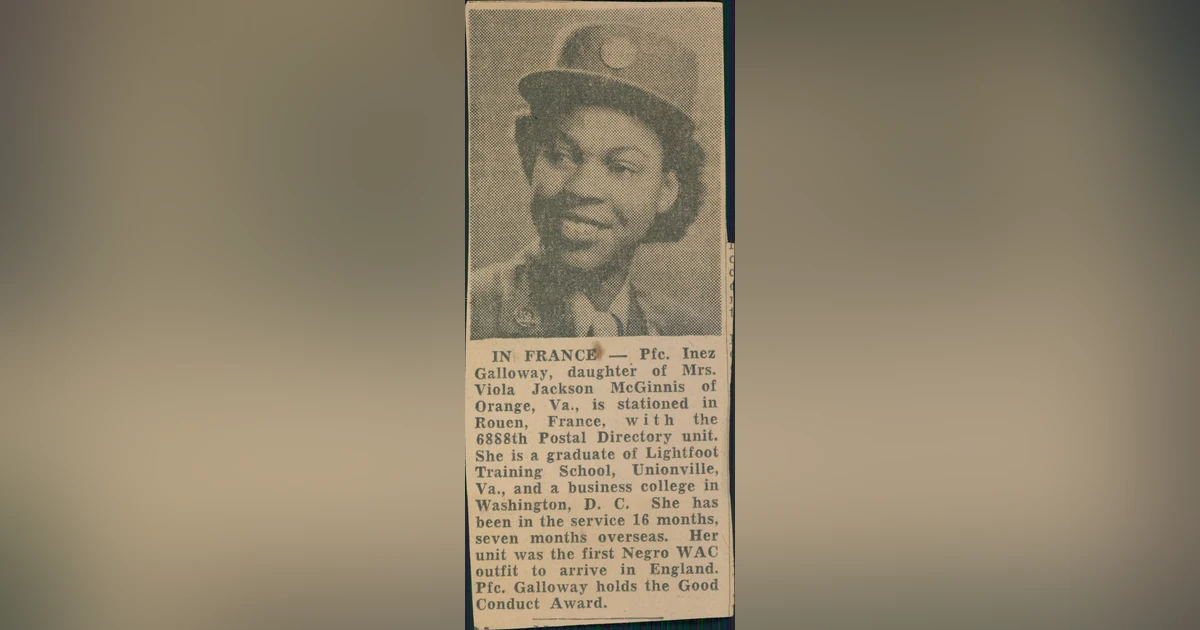

Join us for a captivating episode of 'The Kickback' as host The Dude dives into the fascinating history of the 6888 , a remarkable platoon of African-American women who played a pivotal role during World War II. Listen to an inspiring interview with Denise McBride, the daughter of a 6888 member, as she shares personal stories about her trailblazing mother, who was also a golf phenom.
Discover how these women not only revolutionized the military mail system but also paved the way for racial and gender equality in the armed forces. In this heartfelt conversation, Denise sheds light on their sacrifices, resilience, and the push towards their long-overdue recognition.
This episode will leave you in awe of their extraordinary achievements and the crucial part they played in shaping history. Stay tuned until the end for insights on how we can continue to honor and remember these unsung heroes of the past.
00:03 - Introduction to The Kickback
02:47 - Welcoming the Guests
08:08 - Reflections on Retirement
09:29 - Discovering the 6888
14:53 - Insights from the Movie
17:51 - The Impact of Racism
20:13 - The Locator System
23:04 - Journey to Europe
36:25 - Returning Home
37:50 - Acknowledging Contributions
42:01 - The Legacy of the 6888
45:09 - Sharing Resources and Information
0:00 Good afternoon, everyone, and welcome to another episode of The Kickback. I am your host, The Dude, and as we do every week, we have a great, great topic coming up and a great, great guest today, and we're going to be discussing some history about the movie, The Six Triple Eight. If you've never heard of The Six Triple Eight, then you are behind the times. It is about a platoon of African-American women who got the male taken care of over in Europe years ago, and they did a wonderful job. And tonight we have a story from one of those particular beautiful ladies daughters. She's going to come on and she's going to tell us the story about her mom, who was a six triple eight and also was a golf phenom.
0:48 And this wonderful lady is by the name of Denise McBride. She is a wonderful lady and she has done a lot in the community and she also has ran a couple of programs when it comes to housing. Here in my lovely city of Nashville, Tennessee, if you've never been here, it is a great place to be. We have a lot of things going on, and we are alive, and we are here. So for this great month of February, we wanted to end February on a beautiful note.
1:29 And with that being said, we're about to start this interview with this beautiful woman. If you've never been here before, this is The Kickback. I am your host, The Dude, and we love to have open and honest and transparent and vulnerable conversations about life, love, and whatever it may be that you're going through in life. But we wanted to change the narrative a little bit tonight, and we wanted to do an interview with a wonderful, beautiful lady who's talking about another wonderful, beautiful lady, her mom. So, yeah. If you're in the listening audience, just since not love and we will send love back your way. We always appreciate a follow.
2:16 We always appreciate a like. We always appreciate people coming on our platform and being wonderful human beings, because like I always say, we are ordinary people doing extraordinary things that God has ordained us to do. So, you know, it is always a pleasure and it's always wonderful to be here and have this platform for people to come listen and tell their stories. The kitchen is a place for brothers I don't think please, They take back A place for brothers.
2:59 Music. They take back A place for brothers, They take back A place for brothers. A place for problems A place for problems hello and good afternoon my brother welcome welcome welcome, hey what's going on there the dude man is always having a wonderful wonderful day it looks like they've changed a little bit your picture has gone away my brother, yeah i see that yeah i don't understand what happened right i don't understand what's going on with that either being that usually you have a picture there and but they've changed the they've changed the format. So how's your day been?
4:01 It's been a full day. I've been fully engaged. It's been busy. Played a little pickleball and running around with these kids, getting some to work. And then I had to teach a pickleball class this evening. So I've just been running and gunning. So now you're the teacher. Yeah, well, it's a bunch of little kids that we're trying to expose the children over at Martha O'Brien's to pickleball. They know all about basketball. They know about football, but they don't know about pickleball. So trying to expand their horizons. Do they know about tennis? They probably do. Okay. But they're big into basketball. Of course, because that's what they see a lot of on the TV screen is basketball.
4:46 And there are a lot of people that look up to basketball players. So, you know, and also. I'm having some issues. Yeah, yeah, football, too. I'm having some issues with pie beans. I don't know what's going on, but I'm â. You may have a young lady to speak at tonight. She's a little antsy, so I'm hoping that she can come in. Did you send it to her phone, Mami? Ms. Denise? Can you hear me? Yes, ma'am. Can you hear me? Barely. This is not a format I am accustomed to at all. All right. It is new to certain people, but it's been out for a long time.
5:30 It is, if you turn your device up, you may be able to hear us just a tad bit better. Okay. Hello, Ms. Denise. How are you doing this evening? Okay. Can you hear me? Yes, ma'am. We can hear you loud and clear. All righty. So welcome to the Kickback, Ms. Denise. I am the dude. I am the proprietor of the Kickback and the host. And I'd like to welcome you to the Kickback. We here at the kickback we like to inform the community of what's going on and people in the community and highlight just people ordinary people that have done extraordinary things in their lives and from what i understand from your bio that you said you've done some extraordinary things in your life along with your mom who we want to highlight along with story.
6:23 Now, we want to talk about you, and we also want to talk about her. Both of you all seem to be some wonderful women, and you have some great accolades in your life. First of all, we want to go with you. If you just introduce yourself and tell the world who you are and where you're from. Okay. Well, good evening, everyone. My name is Denise McBride, Denise Meekins McBride. I'm originally from Philadelphia, Pennsylvania, the home of the wonderful Eagles. And although not living there anymore, they're still one of my choice teens, along with, of course, the Titans. I was in the banking profession for over 34 years, retired from there, and then went to work for the state with Tennessee Housing Development Agency, which was a wonderful experience because my job was to go out into the, community. Actually, I have 41 counties. You know, Tennessee has 96, so it's a big place.
7:30 And to talk to mayors and legislators and housing specialists to let them know what we could do in order to help their community. It could have been a tornado, it could have been a flood, or just the lack of housing. Okay. Well, obviously, we also worked with nonprofits. So it was great. It really was. But I retired from there, and I thought I was going to come home and, I don't know, what I've read, relax and go out from time to time. But I feel like I'm back at work. But in this time, it's doing things that I've never had a chance to do or didn't have the time to do. So that.
8:24 So retirement is not what because we all inside of our heads, we all have a facade of what we think things are going to look like in certain areas of our life and in certain points of our lives. You know, like you said, on the movies, they show people on the beach and they're just relaxing and they've got on their hula skirts and their plaid shirts or whatever. And they're just turning back drinks and the sun is just on them and they're just they're just wasting the day away. Well, that was never going to be me. What I thought was now I could go to my exercise classes in the daytime versus trying to go out to work and you're just dog tired.
9:09 I don't work well like that. So I was able to do that. Also take calligraphy, just do some things that I have not had a chance to do. Also, I was going to continue writing, but I would have more time. But... The 6888 came in, and the writing has subsided. All righty. So you've opened that door. Let's walk into that door. Let's walk into that space. The 6888, so your mother's name? Phyllis Wheatley Inez Galloway, married name Meekins. Ooh, that's a lot of names there, baby. That's right. Right.
9:52 Well, you know who Phyllis Wheatley was. Yes, yes, yes, yes. I'm sure I know where she got that from. Inez, I'm not sure. Galloway obviously was the maiden name and Meekins was the married name. But the way I was introduced to the 6888, please, please understand. It's not that I've known about them all my life. Not at all. Well, actually, a friend of ours, we call her Mother Betty because she's also in her 80s and 90s. And she called me one day and she said, I am reading an article about this military group.
10:33 And I think that's your mother. Because, you know, I had discussed, you know, that she had been in the military, among other things. And I said, well, what makes you think that? She said, well, it's an all-black troop. Well, my father was living and I had moved him down here from Philadelphia and I went over there and I said, Daddy, Betty just told me, she read an article, she's sending it to me about this military group that, I'm trying to decipher, was that where mommy was? And he said, what's the number? And I said, oh, I'm trying to think.
11:14 It was a whole lot of the same numbers. He said, the six-triple eight? I said, yeah, that's it? He said, yeah, that's the one she was in. I said, you're kidding me. He says, no, no, no. So I got the article from Betty, and I read it. And I actually tried to get in touch with the person who wrote it. I went on my LinkedIn because this person was on LinkedIn, but this is funny. They had the advanced version. I didn't want to pay for the advanced version. Most of us don't want to pay for the advanced version. So I found someone else who was in the article and I contacted her and she responded immediately.
12:01 And she sent me the people from Virginia and it showed my mother's name. I said, oh, my gosh. So we had, I called her and we had a brief conversation. And she said, if you're interested in joining this group, there's not many of us. I think it was maybe 10. I said, oh, absolutely. So the first thing I did, even before joining the group, I saw a documentary listed. I'd never heard of the company, but that doesn't mean anything. So I wrote them.
12:46 I saw how much it would cost to get the documentary. It arrived, and as soon as it came, I put it in the VCR. And I was surprised because it wasn't the kind of documentary I thought. It was all the women that were being interviewed. So I'm looking at real footage of these women. And of course, I'm trying to see if I could find my mother as you see them marching, but it's really almost impossible. One, because when you're in the same uniform and basically the same hairstyle, Thank you. You don't really see any distinguishing features unless you're going to get close up on someone. Right. It kind of all blends together.
13:33 We couldn't. And they were marching so quickly, you couldn't stop the tape to see if that was the person behind. It just didn't work that way. And so I got all that out of my mind and said, look, let me just listen to this documentary and learn from it. Okay, so that's how it first started. And I attended one of the telephone calls that we had with the 10 people. Now, I'm not sure how I got involved to this point, because all of it's now on me. And we have 105 people now.
14:15 So we have grown. But I will say that Tyler Perry really has to be commended because even though I've been telling the story for about a couple of years, two or three years, there's no way I could reach the audience that he did. And when he was able to do that, so now if I say to you, I want to talk to you about the six triple eight, or did you see the movie? There's that interest there. And I've watched the movie a couple of times with different groups. And each time I've gotten something out of it. Now, it is a historical fiction.
14:59 Everything that in the movie did not happen the way you saw it. Did you see the movie? Maybe I should ask you that first. Yes, ma'am. I've seen the movie. Okay. Okay. So as I said the other day, and I'm not sure you were there when I was talking, I'm that we all have to remember that this all occurred in the 40s. In the 40s, it feels like the 40s now, but it was a different time. And so you had two generations with these women. You had the greatest generation, women born between 1901 and 1927. And then you had the silent generation, 1928 to 1945. So if you look at that, that first generation, they went through the Depression.
15:47 So they understood what hardship was about. And they were ready to change the system. That silent generation that came in, that was really made of people that were like Martin Luther King. Okay, more activist, advocate, yes. Yes, absolutely. And so their way of changing was really learning to work within the system. So when I think about it, you know, the boycotting, the trash system in Memphis, all of that was considered conforming, which it really wasn't, but it was doing in a different way.
16:34 Because honestly, you know, when you hit the pocket, that's really what hurts. most people. So anyway, so that's what you had. This was definitely the Jim Crow era. In Philadelphia, I never saw what people in the South saw at all. So I had a different perspective, but I knew it existed, believe me. So during this time, the only difference was, you know, you just didn't have the shackles, But you were treated as a second-class citizen. One of the things that military men and women, black, really hoped for was that when the United States sees that we are all fighting for the same thing, that you will see me differently.
17:29 Because over in Europe, they didn't have Jim Crow. So you could go everywhere you could do everything. I mean, if you had the time to do it. But you certainly weren't treated poorly. You were treated poorly by the white soldiers, not the people in England or in France. So you were trying to escape something, but you couldn't because you still had the sexism and the racism and the segregation. But what made this battalion so superior, not just the work that they did, they had about 6,500 Black women in the military at that time.
18:16 But only a select few could go on this mission. So in total, the movie tells you it was 855, and that number has been ringing in everyone's ears for years. But it's not true. It's 900 women, 31 of them being officers. And they did have a commanding officer. Charity Adams was no joke. She was not only intelligent, she majored. She went to Wilberforce University. And a matter of fact, she also did some teaching at TSU and some other school.
18:57 But anyway, she had a degree in mathematics and physics. She had great leadership skills, charisma, and she had battalion training. Every black officer that went into training didn't mean that they were going to get a good position. You know, they still relegated us to being head of the bakery. But in this case, she wasn't. And that was great. And they did not expect her to succeed. It wasn't even a consideration. You're going to fail because the white women have failed.
19:41 We know that, but we'll send you over there anyway. Of course. And as the story goes, which is true, they developed an unbelievable system. The only thing I can tell you is it's called the locator system. I have seen some of the charts when I've gone to Fort Greg Adams Museum in Virginia. But I'll tell you now, I don't know anything about what they had on those boards. I didn't understand it. It was like high eclipics. But it was very impressive that she understood, along with these women, that if you don't have mail, then that's going to be a difficult period.
20:30 I did a presentation over at, it was called Grits and Gray, and it's a veteran building on 12th Avenue. And so when I mentioned that, they said, Denise, you may not believe it, But when mail call comes and there's nothing for you, you really feel dejected. You know that your family hasn't forgotten you, but you need something. And if you think about all of the soldiers, they were fairly young. They had not been away from home, let alone overseas.
21:11 So, yes, it was, they needed that boost for the morale. Because honestly, when you think about it, if you're low in your morale, are you paying attention the way you should in a war? No, it lowers productivity. Right. Are you focused right? And so they understood that. And she developed that system of having three shifts per day. 65,000 parcels per hour. And you may have heard me say they did a comparison of what the white troop did.
21:55 See, I had it. I don't know if I can find it. But, oh, here it is. They said that the white postal unit in 30 days did 624,000 pieces of mail. Which, honestly, I think that's stupendous. That's a lot of money. That's amazing. We can't do that. Me and you and everybody here, we can't do that. Certainly not our postal system now. But anyway, as much as we all thought that was something, it could not keep up. So what these women did in 30 days with 5.8 million pieces of mail, And I can't even wrap my arms around that.
22:42 Yeah, that's unfathoming to put the letter that you put behind that number and say that these women did this in 30 days. Right, right. And so this task was supposed to be for six months, and they did it in three months in Birmingham, England. I have some of my mother's writings, journal writing, and the way she discovered that she was going to be asked to go overseas, she was working in the publication division. This is in Iowa. And they called her and said, you need to go to the medical, I'll just say building, I'm not sure what they called it.
23:28 And so she did, and she asked at the information desk, why am I being called? What's going on? Said, well, the doctor will be with you shortly. So I'm not sure what she was thinking. They're like, what? Because you've already had the physical to get in. So what is this? So she got in there, and it was an informal interview. And then he told her that she was to report the next day at 8.30 a.m. for her physical. And she looked at him and said, am I going somewhere? And he said, if you pass your physical, then you will be going overseas.
24:12 Wow. Okay. So she went back to her office and, you know, everyone turned to look at her because, of course, you know, when you've been called out, it's kind of like school. You're called out to the office and everyone wants to know what happened. So. So she told them, she said, I spoke to the doctor and I have my physical tomorrow. And he said that if I pass, I'll be going overseas. And what I enjoyed about her writing that was that she said that the other girls said, oh, that is fantastic. I hope I'll be called too. But good luck to you. So there wasn't any, it didn't appear to be any jealousy. See, it's, gosh, I just hope I get to go.
24:58 Right. Everybody wanted to be in that number. Right. So the next day, she reported 830 and had her physical. And then after that, she had to go to the chaplain. Now, there's nothing in her writing as to why. But I'm thinking the chaplain knows they're going overseas. The chaplain knows that it's a war, that maybe we need to just see if the person is steady with their thinking or they understand what they're getting into. I don't know what they said. I'm making that up. I'm just trying to guess what the chaplain would be saying.
25:41 So she said she waited. She said it was hours and hours. But according to the writing, she waited four hours, not eight, like it sounded at first. And it came back and it said, you passed and you will be going overseas. Now, you know, they didn't know where they were going. Not just them. Charity Adams didn't know either. She could not open up her instructions until they were so far over the water. Then they would tell you where you were going. I assume so that if anything fell into enemy hands, no one would know where you're going.
26:27 So now the way that these ladies went over, they didn't go by plane like Charity and the other officers. They went by ship. And you're supposed to have escorts when you're in a military ship. I mean, it used to be a luxury ship. They took all the beauty out and left it a core. And because they were trying to avoid being torpedoed by German soldiers, they were going back and forth, back and forth, and they were nauseous, I mean, just from that ride.
27:11 Now, the movie says that once they arrived in Scotland and boarded the train, then they immediately had to go march. That was fiction. They did not. They could not. When they landed, got off the train, I was so pleased to see that it was a black chaplain that met with them. I am sure that gave them some peace and comfort because in the movie, it shows the chaplain chastising everybody, especially Kerry Washington.
27:53 And I was thinking to myself, oh, my gosh, it's already a battle, and you'd have to endure that. Now, perhaps that did happen. What I'm telling you is it did not happen when they arrived. They were met by a kind person. So by the time they got to the barrack, which none of them knew what to expect, that Charity Adams and the rest of her ABLE officer crew had already determined what the jobs were going to be because you've got to sustain yourself. I am sure they already knew what their skills were by the applications.
28:38 So they were able to say, OK, we have people that can do the motor, motor cars. We have people that are skilled in auto mechanics. We have people that are stylists, seamstress, clerical. I mean, we have everything, a little nation. So it was, I'm not saying it was easy. Nothing is easy, but they had a plan that they could carry out. And I think that part is beautiful. They still didn't know how much mail there was going to be.
29:18 And I think the movie is priceless as you see Kerry Washington looking and saying, well, maybe we ought to go and see what they're talking about, as she was talking to Abby Campbell. And so when they opened up those plane hangers, first you don't see her you don't see what she's looking at, and then you do see. That must have been just mind-blowing. What in the world? And for them to say, it's not just this one, it's all of these. That mail was from the top of the plane hangers all the way down.
30:01 Those bags were heavy, very heavy. You have to remember, it was wintertime. There was no heat. It was damp. It was old, poor lighting, because they had to cover the top of the hangars so that enemies could not see inside. So now you're working in not only dim conditions, but just poor conditions. And I don't know what they must have thought, but I do know this. That's one thing that black people are resilient.
30:43 You may have something in front of you that you don't quite know how you're going to get through it, but you put your thinking cap on and you work in teams and you get it done. And they did. And they had some fun, not necessarily doing that, but they did have some fun there. They had, I might not know this, but they had a softball team. They had a band because you have people that played instruments. My mother even mentioned that she was going to try out for the choir. I never did hear whether or not she made it or not, but she was. They won championships in basketball and softball.
31:26 And though they didn't have a lot of money because most of them were sending the money home to their mothers and fathers, you know, families, they still ended up donating $4,500 to United College Fund. So they still were thinking about other people through it all. So when they left England, finished the job, 17 million pieces of mail, getting to the right people, what I didn't say was, reason why that was so difficult is because there were a lot of mail, 7,500 to be exact, addressed to Robert Smith.
32:10 Well, you know Robert Smith is common. When we used to have big old phone books, you could go pages and pages with Smith. Yes. Yeah, you could. You could really go. It was the same way. and then people just addressed it to, you know, Johnny or Bubba, just whatever. And I'm sure as they were addressing it, they're not thinking, not having been in that situation, that it just doesn't get to people like that. You know, that's not how it works. There were 4 million people that they were trying to disperse the mail to.
32:51 That included the Navy, the Army, the CBs, as well as specialists that were there, just trying to get the mail to them. At the same token, soldiers are on the move. You know, they're not staying in one place. So by the time the mail gets to destination A, you've moved on to destination C. So all of that was difficult, but they really did have those extraordinary skills of being able to match up things. Something's in the letter, a fabric or something, and they could try to match it up to where that might have come from. Now, they did say in the movie, and this part is true, how dare you open up mail belonging to white people?
33:40 But they had to anyway. They were trying to do it, one, to find the person. Two, it was their job to read mail that might have something in it that it shouldn't have. Now, I'm not talking about profanity. I'm talking about secrets. And so they had to be sure that if there was something that was a message coded, they had to be able to get that. So it wasn't about opening up someone's mail because you were interested in what they had to say. By no means.
34:24 Doing your job and also trying to get you a letter from your loved one that you've been waiting for. So, anyway, they left there and went on to Rouen, France. My mother talked about France. She loved it. Because, oh, France is beautiful, number one. And it had lovely shops. It was luxurious. However, that's not how the French women felt about them. I'm not talking because they were black. is that their country had been invaded and ravaged, and all of the luxuries that they had had, they feel like they had lost.
35:11 As I'm sure if it was here, we would feel the same way. So that wasn't odd. They had POWs to help them with the mail, which was great. I didn't know this a long time ago, but this is probably standard. You're in the service, or have been. But when you capture another country or people, then they become your workers. Yes, yes. They become like a slave almost. That's horrible. But in this case, they did. They became the workers, and so they were able to lift those heavy bags and, you know, help the women.
35:59 So, that ended. They solved the case there in Rouen in Paris. It was time to go home, and they boarded the Claymont. Everyone didn't leave at the same time. You still had people there that were finishing up. But the bulk of the people left, and then they went to Fort Dix and got their papers. The sad thing about all of it It was a great experience, But when they came home There was no fanfare I remember seeing movies And not just movies There's always in Time Magazine They always had the sailor And he's running He's running through his woman Or his children Yes, yes, yes, yes And everybody else is cheering And it's a parade and what have you. It's just glorious.
36:57 We have appreciated everything you have done. It's almost like the vacation thing. What you see on TV versus what's real life. They got off the boat and it was like, oh, we're back in America. Right. Exactly. Exactly. But when we landed and came back home, there was nothing. There was no fanfare. There was no parade. Just, you know, go on back to whatever you were doing. And again, now you're still going to be a second-class citizen because what?
37:38 We still have Jim Carle here. So the fact that you served your country, you showed your love. And we've always done that. We've always loved our country. Our country just hasn't loved us. And that's just a sad statement. Yeah, it's very true. You're very true with that. It has been that way for ages. You know, a lot of things, a lot of the inventions that we use now in this time was invented by African-American people, but they don't get the recognition for that.
38:23 At it it's it's it's the same with your mother and the six triple eights is they went and, revolutionized a partial service that that their counterparts the caucasian women couldn't, get together and like you said there was no celebration there was no fanfare there was no open arms for them when they came home it was like okay now go find a job going back in that kitchen and start cooking. Go on back over there and start nursing these babies and work for the man. Yeah, I mean, exactly. And what really brought it home just the other day, I was watching CBS Sunday morning, and they were talking, to really the children of the Holocaust, but they are now 90 years old too.
39:20 And they said you know we keep telling our story, and it is sad to know that in eight years, maximum we will all be gone I mean gone off the earth and the way that we're holding knowledge back we don't want people to read we don't want them to know history, It's all American history Yes, it's been done by different people But it's still our history. Someone might say 20 years from now What Holocaust? There was never one There's no one who can tell you that I'm pretty sure If we asked a 20 year old Right now what the Holocaust is They couldn't tell you what it is No, And that's very sad because I don't think it's the young people that are saying, I don't want to know.
40:22 You're taking all this information from them, which really keeps them very stupid, really. But, you know, you want to whitewash everything to say that there is only one race that ever did anything. It's very sad. But anyway, regardless, these women were pioneers or trailblazers, whatever word we want to use. And they did dispel stereotypes and did represent a change in racial and gender roles in the military. I know the military still has issues, at least the ladies I spoke to.
41:05 I didn't hear where things had changed so significantly. I'm not saying they didn't have change, but I saw them nodding their heads like, I know what this is about. These women still, despite it all, they loved our country. They were excited about the opportunity to further their education Because remember, as a WAC, you were entitled to the GI Bill. And so they also shared a sense of purpose and determination. And I say travel, of course, shared experiences, and a sisterhood.
41:53 There's no way you couldn't have a sisterhood living with a number of arms. I'm sorry. Living with people, and then actually being side by side through good and bad instances. So out of the 900, we have two left. One is 104, Mrs. McClendon, and Ms. Robertson is age 100. And that is why we want so much that the Congressional Gold Medal Ceremony, we want it now.
42:34 And I don't know if I mentioned this to you, it is going to be now. Right. It's got to be now. It's got to be right now. It's going to be on April 29th. Wonderful, wonderful. That is right now. And I don't know if either one of those two women will be able to come because they have health challenges. And you know how DC is, you'll walk forever. And with DEI, honestly, I don't expect to see anything that's available for people that have any disability. Right. You don't know what they saw. But I do know that in both of their cities where they're from, something will be done stupendous because we want this for them more than for ourselves. My mother's gone.
43:29 And yes, I want it to remember her by for everything that she did. But if she were here, I'd want it to go to her, just like those two women. And that's been the story. And sometimes I just sit back and say, I don't know if I could have done it. I just I don't know. I don't know. But it's a different time. They had good leadership. And I think I said in the beginning with Mary Bethune, who was wonderful. As a matter of fact, my daughter and son-in-law went to Bethune University.
44:14 And it was college, and then it turned into university. I remember going there, and they have a ceremony every year honoring, you know, Dr. Bethune. It's part of the culture of the school. Just like it fits, it's the culture of the school to honor Dr. W.E. Du Bois. As you should. As you should. They've made strides. And I always applaud any HBCU school, and this is off the topic, but any HBCU school that honors their ancestors and what they provided to them and continue to provide.
45:02 So, anyway. It's wonderful. And you've been a breath of air. We've got about 10 minutes left. If there's any information, where can people go and read about your mom and the story that you've heard from the back side? Can you give like a website or anything like tell the people where they can go to get information? because in the comment section, there were people asking, where can they go and read about your mom and read from the other side? Now, people have seen the movie, but you gave some insight on some other things, and I'm pretty sure the letters and the things that you have give a different deflection.
45:47 Well, as a matter of fact, when we go on April 29th, one of the things that we're being asked to consider is if you have letters, Not uniforms, not that big stuff, but if you have letters or journals or whatever, if you want to give it to the Library of Congress. So I'm seriously thinking about that because I know they'll keep those documents. And me trying to keep them, I can't keep them in the pristine shape. I've done well. Know, for paper to be as old as it is, but I know that they will do a better job of it, and then I don't have to worry the next generation, next generation, you know, where are those documents, where are those papers, and all that.
46:36 Now, I'll keep the medals and things that I have, just like I did for my father, but one book that, there are several books, oh, let me tell you something, I just thought about this. On, oh my God, the 28th, and I know the 1st, and the 2nd of March. Do you know what the Dark Horse Theater is? Yes, ma'am. Okay, there's a young lady, and I think her last name is McCollum, Mary McCollum. And believe it or not, she did a play in 2014 on the 6888, way before I knew anything about the way I do now.
47:25 And she is resurrecting her play on those days, which if any of your listeners would like to see an abdication of a play, I think they should consider going. A book that Charity Adams wrote, it's called One Woman's Army. A Black Officer Remembers the Wack. One Woman's Army, Charity Adams Early. I have read it a couple of times. It's an easy read and it's written so well. You feel like you're there.
48:08 And of course, the detail that she has, since it's coming from her, it's much more than I could ever do because it's her life she's talking about. But it's an excellent book. If you just simply put 6888 in Google, I can't tell you how much stuff will come up. It is incredible the amount of information that is on there. Now, you're not going to find that information on my mother because she was one of 900. She wasn't one of the stars in the movie. She's just one of those women that were marching. But I will say this, that all of those, I won't say all the women, I don't know that.
48:53 The people, the descendants that I talk to now, our group. All of our mothers went on to do fabulous things. So it was almost like, okay, that's one part of their life, early life. None of them were married or anything. Then they got married, went to work, and then they developed their own careers. For my own mother, she turned out, she worked for the federal government for a while. And in 1973, she took her whole paycheck, and I don't think the paycheck was like $10,000 or anything like that, but she took her whole paycheck and really invested in herself.
49:41 She decided that she was a very good amateur golfer, very good. And she decided she was going to take that to another level. First of all, black and brown children did not think they could even play golf. It was too expensive. They just weren't surrounded by it. But believe it or not, when my mother was nine years old in Orange, Virginia, there was a golf course near her home, and she saw it several times and thought it was so beautiful. I don't know what the serenity of it or the fact that it was you and the ball and of course other people but everything was determined by you it's not a team sport where what you do matters it's what I do and she never had a chance until she was grown she went right it was almost like, Time came, and now I can go and try something that I wanted to do at 9 and 10 years old.
50:52 Because her first love was riding horses, and so she wanted to be a female jockey. Not sure that she understood that she would grow, and she would not be that demure size in order to be a jockey. Anyway, that was still her dream. I mean, my grandfather trained horses. You know, Virginia was great for that kind of thing. So anyway, so she started her own school. She started the school in her church, Holy Cross Lutheran Church. She went to the pastor, along with whom we call Mother the Church, and said, Phyllis wants to open a golf school.
51:38 And she wants to start with the youth here. And he said, I know her love of golf. I know her passion. I know her determination. And yes, you can use the rooms downstairs, you know, but you'll have to clean it, whatever. And so my father came in and they worked and started that school. Then she went on and. Continued with her own training and became the second lady professional golf instructor ever. And when I say the second, the next one was not done until 20 years later.
52:22 That's a long time not to have anybody else. Yes, it is. That is a long, long time. Yes. So I was fortunate the LPGAs called me and said, we want you to come down here. This was last May, and we'd like for you to be our featured speaker, which is fine. And so I did. And then right after that, I was asked by the Philadelphia Golf Club. It was called the Greens Ladies Golf Club. They started in 1954, and my mother was one of the members. And they actually sponsored her one year to go and play in a pro-am.
53:09 A pro-am is an amateur and a professional player. And she did so well. Matter of fact, they won. And they won because she had like a 41-inch putt. I mean, it was just fantastic. She was over the moon. So was everybody. And so that just propelled it. But I told her golf club, you know, this is 50 years ago, that that was the start. I mean, her club gave back to people who were serious about going to the next level. And that meant a lot.
53:50 Really meant a lot. So not only did she do that, but her school became, you heard of the first tee? Have you ever heard of first tee? They talk about first tee at a lot of golf courses. Well, her first tee was way before first tee was ever thought of because they didn't even have that. I mean, she was always before her time. No one had thought about, because these were black and brown children, she supplied them with all of their clothing, all of their clubs, their balls, their caps or visors, whatever.
54:38 She taught etiquette. She had tutoring for them for academic subjects. They have everything. And then she was able to take that course and expand it year round and then have them be on the golf course in the summertime. It was called Freeway Golf Course. There were only two or three Black golf courses, and that one was one in Sickleville, New Jersey. So those children had a chance to see Black ownership. So it was just remarkable, remarkable. Those students, some went on to go to college and play golf and do other things.
55:27 My daughter went to school on a golf scholarship. So, yeah. That's beautiful. It gave the experience, like you said, that a lot of black and brown children won't get. Now, you know, here in Nashville, we have a black golf course, the Ted Rose Golf Course. Well, it was. It's wonderful. You know, we are almost out of time. I just wanted to say thank you. Thank you so much. My pleasure. Thank you so much for listening to the story because it is an important story. And what I keep telling people is tell one other person, not just this story, because we've got hundreds of stories.
56:11 Yes. Yes, we do. Let's share our stories. You know, we're responsible for ourselves and we're proud of ourselves. And let's show that. Yes, ma'am. Denise McBride, we thank you here at the Kickback and you have a wonderful afternoon. And we will be checking back in with you and looking out for some more great information when it comes to the six triple eights. OK, OK. Stay tuned for April. All right. Yes, ma'am. Thanks so much for the opportunity. You're welcome, ma'am. Have a great night. Okay. Bye-bye. Bye-bye.
56:59 Music. The Kickback, a place for brothers Bye-bye. I kick back a place for brothers and sisters. To kick back, a place for brothers, to kick back, a place for brothers, to kick back, a place for brothers.

